
Making sure that a water bottle is BPA-free is essential for buyers and wholesalers selecting safe products for their customers.BPA free water bottles are of great importance for healty daily hydration. Here are several effective ways to determine whether a plastic water bottle contains BPA.
Check the Recycling Code on Plastic Bottles
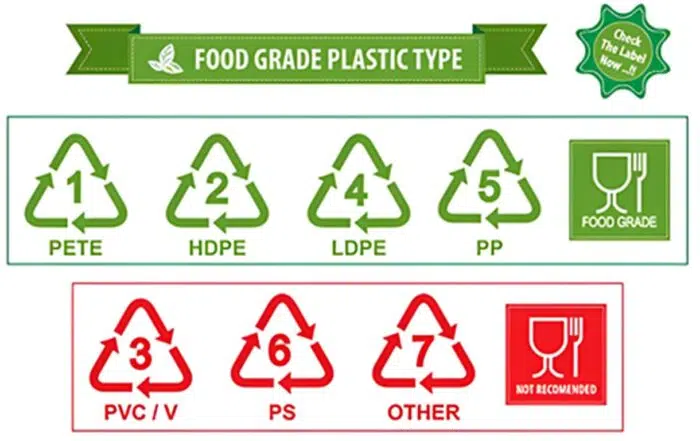
Plastic bottles have a triangular recycling symbol with a number that indicates the type of plastic used. #5 (PP – Polypropylene) and Tritan are generally considered as BPA-free materials. Polypropylene (#5) is widely used for food and beverage containers due to its heat resistance and durability. Tritan, a specialized plastic classified under #7, is designed to be completely BPA-free, offering a strong and lightweight alternative to traditional plastics. However, certain plastics should be avoided due to the potential presence of BPA. #3 (PVC – Polyvinyl Chloride) and #7 (PC – Polycarbonate) may contain BPA and are not recommended for water bottles. Particularly Polycarbonate (#7) is known to leach BPA into liquids, especially when exposed to heat or acidic beverages.
Check Product Packaging and Certifications
When buying water bottles, it is quite important to check the packaging for BPA-free labels or official certifications. Manufacturers that use BPA-free materials will typically indicate this clearly on their products. The label "BPA-Free" ensures that the bottle does not contain bisphenol A, making it a safer choice for consumers.
Choose Reliable BPA-Free Materials
As previous one article, we have know the BPA free materials, so when purchasing water bottles, Opting for BPA-free materials ensures the safety and durability of water bottles. Glass, food-grade stainless steel, Tritan, and food-grade silicone are the preferred choices for manufacturers producing safe and high-quality drinkware. Be always in mind,health is at the first. Take care of one's health start from a healthy water bottles.


