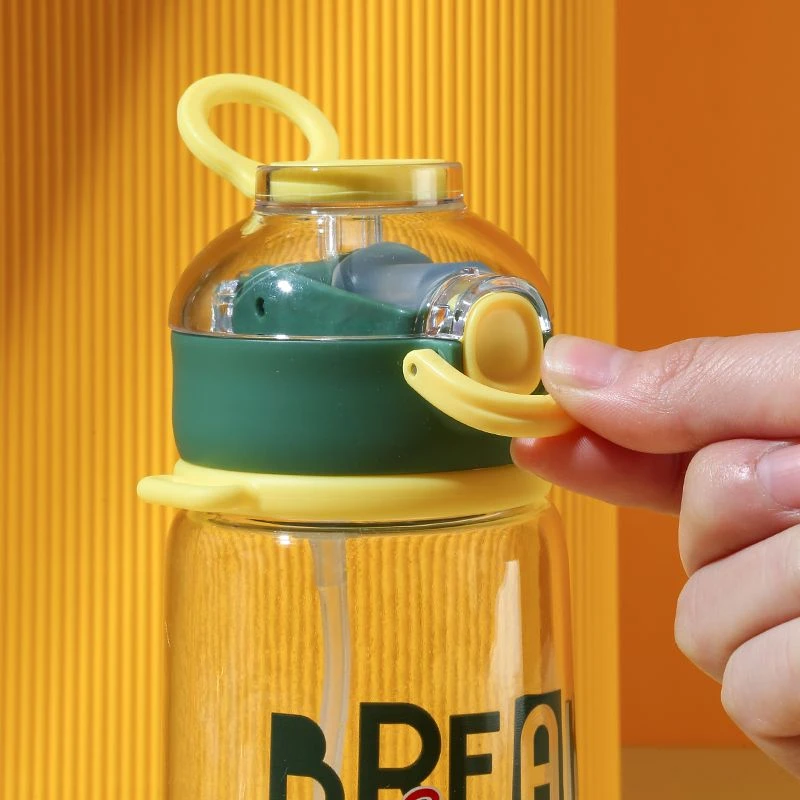
The process requirements for children's water bottles mainly include the following aspects:
Material selection: Children's water bottles should use safe and non-toxic materials, such as food-grade stainless steel, food-grade plastics (such as PP, PE), etc. These materials should comply with relevant national safety standards to ensure that they will not affect children's health.
Design requirements: The design of the water bottle should take into account children's gripping ability and usage habits. The bottle body should be designed to be easy to grip and avoid sharp corners to ensure that children will not be injured during use. In addition, the bottle cap should be designed to be leak-proof and non-slip to prevent accidental opening or leakage.
Manufacturing process: The manufacturing process should ensure the sealing and durability of the water bottle. Common manufacturing processes include extrusion blow molding and injection blow molding. Extrusion blow molding is suitable for the production of large containers, while injection blow molding is suitable for the production of small precision products. Both processes can produce water bottles with uniform wall thickness and small weight tolerance, which are suitable for children.
Safety performance: The water bottle should pass relevant safety tests to ensure that it will not break or leak in various usage scenarios. The design of the bottle mouth and bottle cap should ensure that there is no risk of suffocation, especially for younger children.
Environmental protection requirements: Water bottles should use recyclable materials to reduce environmental pollution. The design should consider easy disassembly and recycling to promote the recycling of resources.